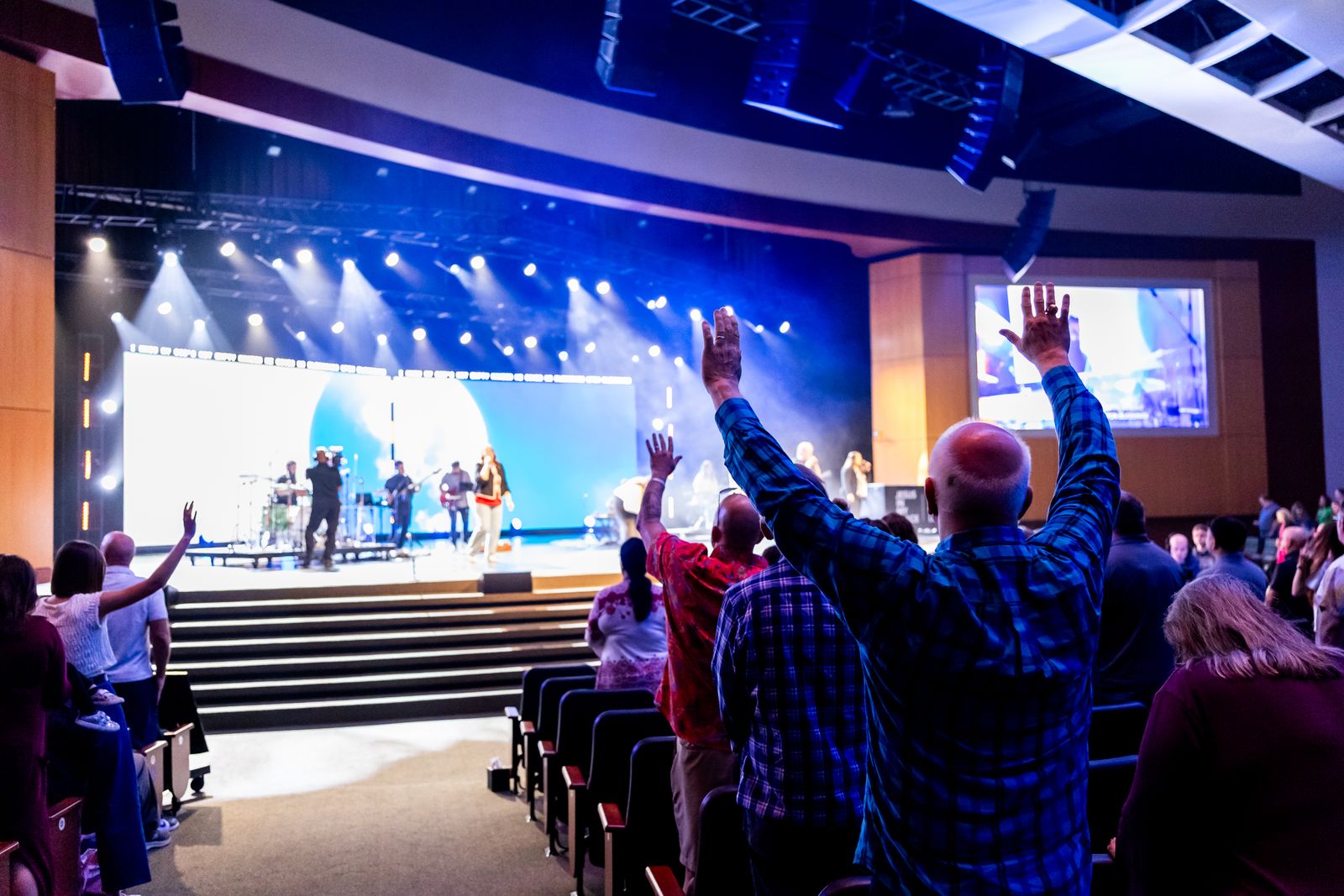
Every sound tech has heard it: someone stops you in the lobby to say the sound was "too loud," or "muddy," or "I couldn't understand a word the pastor said." The instinct is to reach for the main fader and pull it down a few clicks. Sometimes that helps. More often, the complaint comes back the next week — because the volume was never really the problem.
If you're trying to figure out a target dB level for worship, we've written a full guide on that. This post is about something different: what to do when the complaints keep coming even though your levels are already reasonable. In our experience tuning and mixing church systems, most recurring complaints trace back to one of four fixable causes — and none of them is "play it quieter."
Why turning the volume down doesn't fix it
Pulling the main fader down affects everything equally — vocals, band, and clarity all drop together. If the actual problem is a buildup of harsh frequencies or an uneven room, a quieter mix just becomes a quieter version of the same problem. The congregation still can't understand the words, the front rows still get blasted while the back row still strains to hear, and now the band has lost the energy that made people want to sing in the first place.
The fix is almost always to find and correct the specific thing causing the complaint, not to lower everything across the board.
Complaint 1: "It's too loud" (but the meter says it's fine)
This is the most common mismatch in church audio. A mix can measure at a perfectly reasonable level and still feel loud, because perceived loudness and actual sound pressure aren't the same thing.
- Low-mid buildup. Guitars, keys, vocals, and kick drum all compete in the 200–500 Hz range. When they stack up unchecked, the mix feels dense and fatiguing even at a modest SPL. Carving a little space for each instrument in this range is one of the fastest ways to make a mix feel less loud without touching the fader.
- Harsh top end. Sibilance and cymbal wash in the 2–5 kHz range read as "piercing" long before they read as "loud" on a meter. A gentle dip here, especially on vocal channels, takes the edge off without dulling the mix.
- Uncontrolled low end. Sub-bass that isn't high-pass filtered builds up in the room and rattles the back wall, adding to the sense of overwhelm even when the vocal is perfectly audible.
Before you touch the main fader, walk the room during a song and listen for which of these three is actually happening.

Complaint 2: "I can't understand the words"
This complaint usually isn't a volume problem at all — it's a clarity problem, and it can happen at any level, loud or quiet.
- Vocal masking. If the band occupies the same frequency range as the vocal (particularly acoustic guitar and keys in the low-mids), the words get buried even when the vocal fader is pushed up. The fix is to make room for the vocal in the other channels, not to keep raising the vocal.
- Room reflections. Hard, parallel surfaces (bare walls, glass, low ceilings) smear consonants into slap-back and flutter echo before they reach the listener. This is an acoustics problem, and no amount of EQ or gain will fully fix it — see the acoustic treatment note below.
- Compression working against you. Over-compressed vocals can lose the natural dynamic accents that make speech intelligible. A lighter touch, or a de-esser instead of a heavy-handed compressor, often clears things up.
Complaint 3: "The front is blasted, the back can't hear anything"
This is a coverage problem, and it's one that mixing alone cannot solve — you can turn the whole system up or down, but if the room isn't covered evenly, someone is always going to be unhappy.
- Speaker aim and throw. Main speakers aimed too high or too low, or without enough downward tilt for front rows, create hot spots and dead zones in the same room.
- Missing delays or fills. Larger rooms, balconies, and under-balcony seating usually need time-aligned delay speakers so the back of the room isn't relying on the tail end of the main system's throw.
- Console position bias. If the FOH position is tucked under a balcony or against a back wall, the mixer is hearing a different room than the congregation and will unconsciously compensate in the wrong direction.
If your room has persistent hot spots and dead zones no matter how it's mixed, that's usually a system design issue rather than something a volunteer can EQ away on a Sunday morning — it's worth having a proper coverage assessment done.
Complaint 4: "It sounds great some weeks and rough others"
Inconsistency is its own complaint, even when no single Sunday is disastrous. It almost always comes down to volunteer training and documentation, not talent.
- No documented starting point. If every volunteer builds the mix from scratch each week, the room will sound different depending on who's behind the console. Save scenes or a written gain/EQ starting point for each input so everyone begins from the same baseline.
- Inconsistent gain staging. Different volunteers often set input gains differently, which throws off every fader and processor downstream. A quick gain-staging checklist before the first song prevents most of this.
- No feedback loop. If nobody reviews a recording or gets notes after the service, small habits (riding the vocal too hot, forgetting the high-pass filter) never get corrected. A short debrief or a rotating "second set of ears" catches this early.
The pattern: "too loud," "can't understand it," "uneven," and "inconsistent" are four different problems with four different fixes — EQ, room acoustics, speaker coverage, and volunteer process. Turning the volume down only ever addresses the first one, and even then only partially.

When it's bigger than a mix tweak
Sometimes the complaints keep coming despite good gain structure, sensible EQ, and a trained volunteer team — and that's a sign the room or the system itself needs attention, not the mix. A few signs it's time to bring in outside help:
- The room has an obvious echo or slap-back that no amount of EQ can tame.
- Certain seats are always too loud or too quiet, service after service, regardless of who's mixing.
- Your system is old, mismatched, or was never designed for the room it's in.
At that point, it's worth getting a church sound consultant to walk the room with you and diagnose whether the issue is acoustic, tuning-related, or a genuine system design problem — versus paying a church sound installation company to add more speakers to a room that just needs to be tuned correctly. A short consult can save you from spending on the wrong fix.
Want a second set of ears on your room? CalvinSunday Studios designs, tunes, and mixes church sound systems across Northern California, and trains your volunteer team so the fixes stick. Learn more about our church audio services, or see our pages for Redding and Chico.
The short version
Before you turn the volume down, figure out which complaint you're actually solving. "Too loud" usually means low-mid buildup or harsh highs. "Can't understand it" usually means masking, room reflections, or over-compression. "Uneven" usually means speaker coverage. "Inconsistent" usually means volunteer process. Fix the actual cause and, most weeks, the fader barely has to move.